Introduction
Craft World on Ronin is quickly becoming one of the most talked-about Web3 games in the blockchain gaming space — and for good reason. What happens when a co-founder of Kolibri Games – the studio behind Idle Miner Tycoon with over 100 million downloads, later acquired by Ubisoft – decides to build the next generation of gaming on the blockchain?
You get Craft World on Ronin – the flagship title from VOYA Games and its studio Angry Dynomites Lab, now live and thriving on the Ronin Network. On the latest episode of RoninBros (Ep. 21), the Angry Dynomites Lab team joined hosts Mookie and Brian for a deep dive into the game’s origin story, cross-game collaborations, upcoming features, and hard-won lessons from building a player-owned economy in Web3.
This article breaks down every key insight from that conversation – corrected, fact-checked, and enriched with context that only long-time Craft World players would know.
Speakers
This X Space featured three voices from the Ronin gaming ecosystem:
– Agnes ([@Agn3s_eth](https://x.com/Agn3s_eth)) – Growth & Community Lead at Angry Dynomites Lab
– Mooki ([@MukeGaming](https://x.com/MukeGaming)) – Co-host of RoninBros, daily Craft World player
– Brian ([@BG_Crypto4](https://x.com/BG_Crypto4)) – Co-host of RoninBros, Ronin ecosystem advocate
Follow the conversation: [@AngryDynomites](https://x.com/AngryDynomites) | [@Ronin_Network](https://x.com/Ronin_Network)
The Origin Story: From Kolibri Games to Craft World
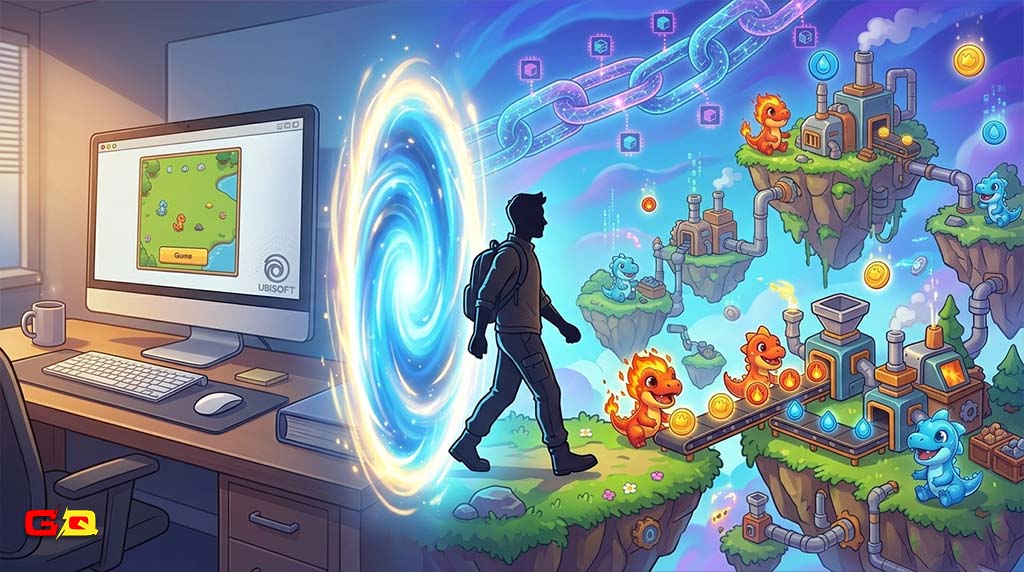
The story of Craft World begins with Oliver Löffler (known in the community as “Oli” or “Revo”). After co-founding Kolibri Games and selling it to Ubisoft for a nine-figure sum, Oli could have retired. Instead, he dove headfirst into blockchain technology.
As Agnes, the team’s growth and community lead, explained during the X Space:
“The deeper he fell into this rabbit hole of what this technology is actually able to do, especially in gaming, the more he was like – wow, this can really change how gaming studios build games.”
Oli saw a critical gap in the market. On one side, there were Web2 gaming studios with deep knowledge of game design but no blockchain expertise. On the other, crypto projects were launching tokens and NFTs but failing to build actual engaging games. Very few teams combined proven gaming experience with real blockchain integration.
Together with CTO Flo and their art designer, Oli founded what would become Angry Dynomites Lab. Agnes was the first full-time employee to join, making her an OG member of the team from the earliest days.
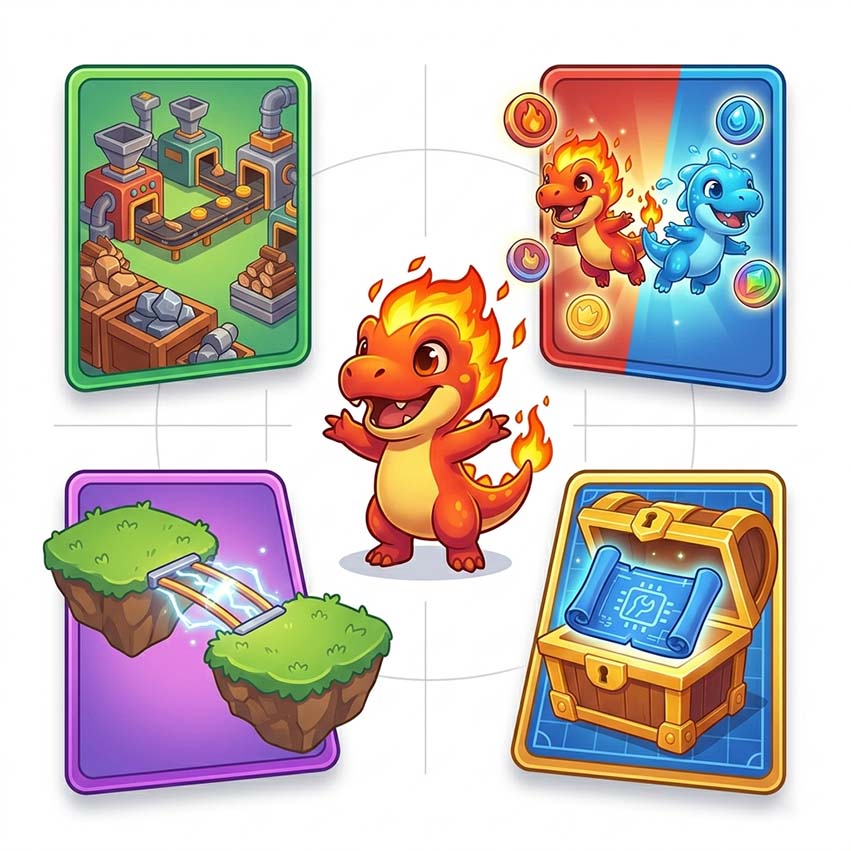
The game went through dramatic visual and mechanical evolution. Early versions featured recipe books where players could “cook” and craft resources. Today, those have transformed into the factory-based system that defines Craft World’s core gameplay loop: Collect → Craft → Trade → Build.
NFT Collections: The Foundation of the Player-Owned Economy
One of the most important topics covered in the X Space was the role of Dyno NFT collections in the game’s economy.
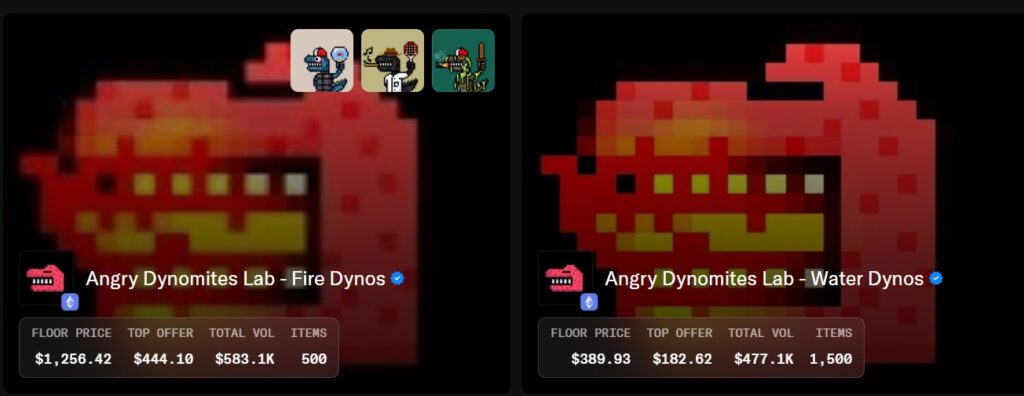
Fire Dynos – The Genesis Collection
The team’s first move was launching the Fire Dyno NFT collection – a deliberately small supply of just 500 NFTs. This was during the bull market and served as a proof of concept to gauge community interest. It sold out immediately.
Each Fire Dyno produces $FIRE tokens – the rarest base resource in the entire Craft World ecosystem.
Water Dynos – The Second Collection
Approximately five months later, the Water Dyno NFT collection dropped with a supply of 1,500 NFTs. It also sold out instantly, confirming strong demand and validating the team’s vision.
Each Water Dyno produces $WATER tokens, another essential base resource required for crafting higher-tier materials.
How NFT Utility Works in Craft World
| Collection | Supply | Token Produced | Production Rate | Role |
|---|---|---|---|---|
| Fire Dyno | 500 | $FIRE | 5–20 tokens/hour (by rarity) | Unlocks Volcano |
| Water Dyno | 1,500 | $WATER | 5–20 tokens/hour (by rarity) | Unlocks Waterfall |
These NFT collections form the economic backbone of Craft World on Ronin, giving holders a uniquely powerful role in the player-owned economy.
As Agnes emphasized during the Space:
“The NFTs are really the source of these very rare resources. Each holder is actually the only person who can produce these resources. They can sell to the market, they can decide to use them themselves.”
Critically, the team designed the game so that NFTs are not required to play. Players without Dynos can still acquire $FIRE and $WATER through the in-game Exchange (unlocks at Level 12), the Vault (Level 11), community tournaments, or direct trades with other players. The game is accessible to everyone – but NFT holders occupy a uniquely powerful position as the sole producers of the rarest resources.
Combined, both collections have traded over 300 ETH in total volume on secondary markets – a strong signal of sustained demand and real utility.
Interoperability: From Buzzword to Working Product
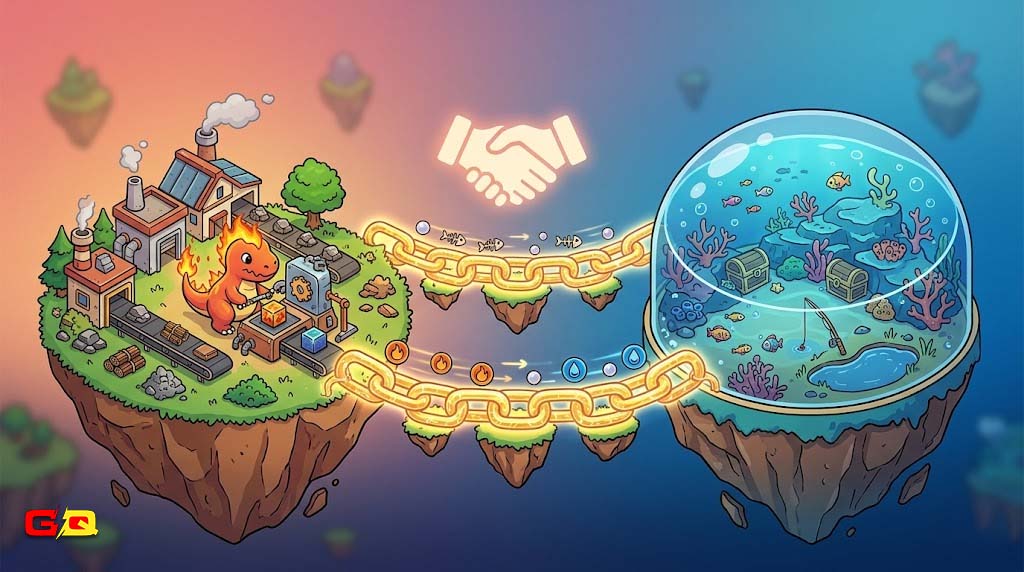
For years, “interoperability” was the most-discussed yet least-delivered promise in Web3 gaming – until Craft World on Ronin actually built it. The idea that assets from one game could be used in another remained largely theoretical – until Craft World actually built it.
The Fishing Frenzy Collaboration
One of the standout moments of the X Space was the discussion around the Craft World × Fishing Frenzy partnership. Fishing Frenzy, another game on the Ronin Network, collaborated with Craft World in a cross-game event where:
- The $FISH token from Fishing Frenzy was integrated into Craft World’s crafting system
- A dedicated crafting area was built with Fishing Frenzy’s visual themes and narrative
- Players used Fishing Frenzy tokens alongside Craft World resources to create entirely new in-game items
- Players could use their Fishing Frenzy avatar as their profile picture in Craft World and received decorative items like an aquarium
As one of the hosts noted:
“That was one of the few cases in the whole crypto gaming industry where we actually saw interoperability. Everyone talked about it, but nobody was doing it. When Craft World and Fishing Frenzy did it – you could actually use a token from another game in your game. It was crazy.”
Six to Seven Collaborations and Counting
The team has completed approximately six to seven cross-game collaborations to date, including partnerships with projects like FSL (STEPN/Morchi) and Sandy Codex. Each partnership event follows a proven model:
- Select an asset (usually the partner’s main token) from the partner project
- Build a unique crafting area with custom visuals, narrative, and game mechanics
- Combine partner tokens with Craft World resources to create new items
- Reward top contributors from a prize pool, often self-funded by the deposited tokens
This model creates a genuine win-win-win scenario:
- Players get fresh content, new gameplay mechanics, and rewards
- Partners gain visibility, token utility, and exposure to Craft World’s player base
- Craft World gains new players, content variety, and stronger community connections
Lessons Learned About Interoperability
Agnes was refreshingly honest about the challenges:
“It takes way more work than we initially thought to set up. There’s always small things – one token is on another chain, then you need to build another system. Even though you already have the setup, you’d think you can easily apply it, but it’s not like that.”
The team decided to temporarily pause in-game partner events to focus development resources on core game features and player acquisition. However, they plan to resume collaborations and are even developing a self-service template to make future integrations faster and easier.
Why Craft World on Ronin? The Decision Behind the Home Chain
One of the most discussed questions in the Space was straightforward: why Ronin?
Agnes explained the decision-making process:
“From a technology perspective, all chains are very similar. But Ronin is the only chain focused on gaming. All big games are already on Ronin. It was clear for us that this is the ecosystem where we want to be – where the Web3 gamers are, and where the other gaming companies we want to be part of are.”
The team evaluated multiple blockchains, considering technical capabilities and promotional support. Ultimately, Ronin’s gaming-first identity – anchored by Axie Infinity and growing with titles like Pixels and Fishing Frenzy – made it the natural home for Craft World.
Brian, the RoninBros co-host, added important context about Ronin’s upcoming Ethereum layer migration, which will position the chain as Ethereum’s gaming layer – potentially bringing even more exposure to games like Craft World.
Relationship with Sky Mavis
Agnes shared insights about what it’s like working with Sky Mavis, the company behind Ronin and Axie Infinity:
- The team has a dedicated Slack channel with direct access to Sky Mavis contacts
- Bi-weekly calls ensure alignment on development, marketing, and ecosystem initiatives
- There are no hierarchies – the Craft World team can ping anyone at Ronin directly
- Sky Mavis is consistently supportive and responsive to ideas and proposals
“It really feels like you are a team together. Ronin is really, really supportive, and we really appreciate that.”
This level of support is notable and is one of the key reasons Craft World on Ronin continues to evolve faster than most Web3 games on competing chains.
The Bot Challenge: Lessons from Mainnet Launch
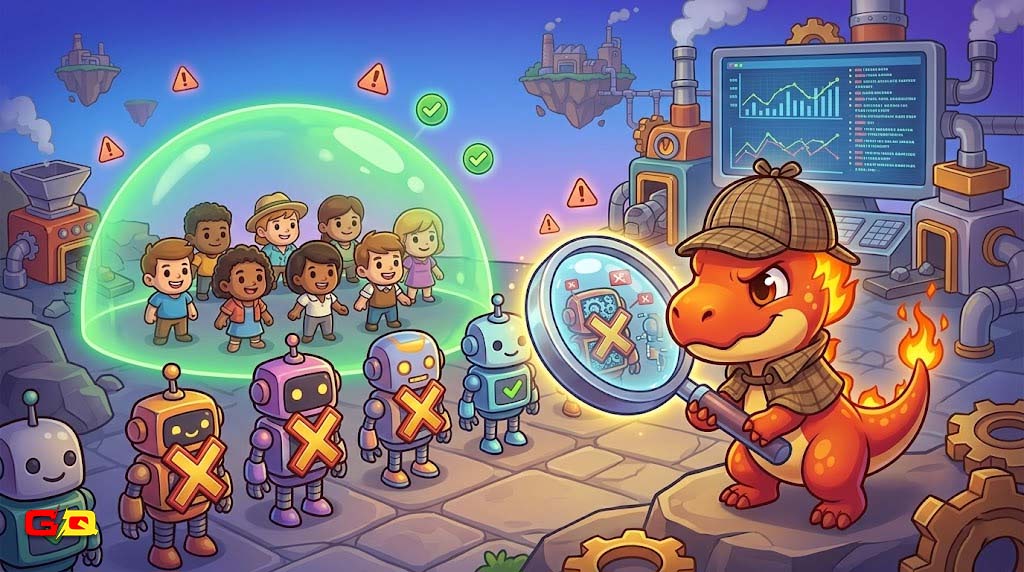
Building a blockchain game like Craft World on Ronin with real on-chain assets inevitably attracts bots. Agnes was candid about this challenge, particularly around the Project Voyager launch and the transition from testnet to Ronin mainnet.
What Happened
Project Voyager was a meta-layer game built on top of Craft World that rewarded players for their testnet activity. Through a questing system, players earned Crystals that could be converted to Dyno Coin on mainnet. The longer and more actively someone had played Craft World, the more quests were available and the more Crystals they could earn.
This system, by design, attracted bot operators who tried to farm rewards without genuine engagement.
“We knew there would be bots. What we weren’t aware of was the amount. That was really crazy to see.”
How the Team Responded
Rather than viewing bots as purely negative, the team used the challenge to make the game more robust:
- Implemented detection systems to identify bot behavior
- Made changes to reduce the profitability of botting
- Continued iterating on anti-bot measures as an ongoing effort
“In hindsight, it was good for the system and good to know how to handle it. I think the battle against bots will always be going on, but we’re on a good track.”
The conversation also touched on the emerging challenge of AI agents – tools like Claude and cloud-based automation that can be programmed to play browser games. This represents the next frontier of bot prevention for all Web3 games.
Monetization Advice for Web3 Game Builders
One of the most valuable segments of the X Space was Agnes’s advice on monetization – a topic she believes many Web3 gaming projects dangerously neglect.
“A lot of Web3 gaming projects don’t look at the monetization part of gaming. There’s this anticipation in crypto that you can just earn by participating – and that’s where scams come in, because there’s never free money.”
Her key points:
- Don’t be afraid to monetize. This is how games survive and grow. Revenue enables user acquisition, which brings in new long-term players.
- Web2 and Web3 players feed off each other. The game loop works best when both communities coexist – casual players who enjoy the game alongside crypto-native players who engage with the deeper economic layers.
- Monetization isn’t anti-crypto. It’s a core part of building a sustainable business, even if it doesn’t fit the “everything should be free” crypto narrative.
Craft World already implements monetization through:
- Rewarded video ads (optional x2 factory speed boost)
- Ad-free packages for players who prefer uninterrupted gameplay
- Nano Token Fees on in-game trades
- Microtransactions for cosmetics and progression accelerators
Exclusive Alpha: Chests & Blueprints System
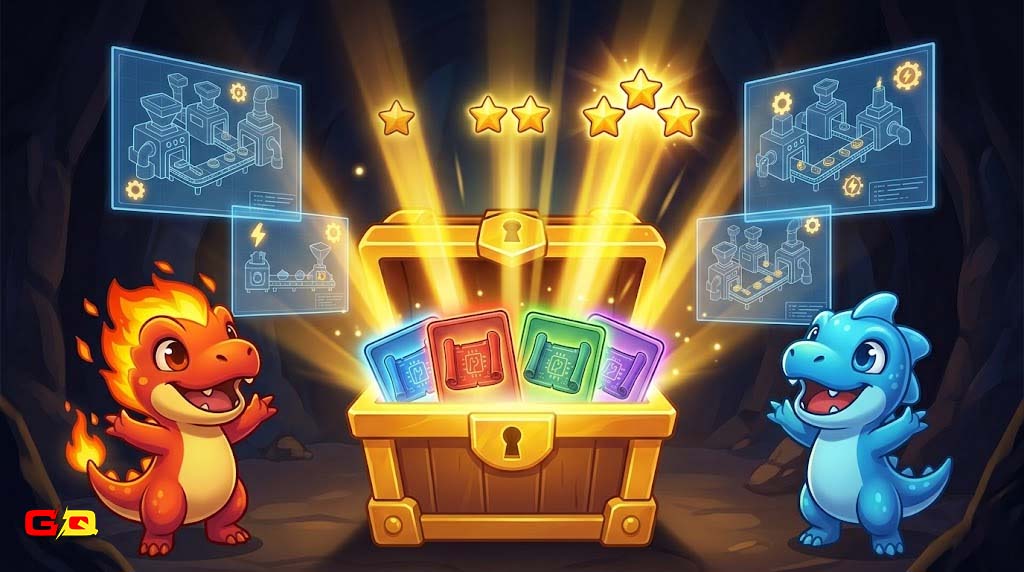
The biggest reveal of the entire X Space was the Chests & Blueprints system – a new gameplay layer currently in early development.
⚠️ Important disclaimer from the team: This feature is still in early development and everything described may change before release. Take this alpha with a grain of salt.
How Chests & Blueprints Will Work
Based on what Agnes shared:
- Chests will be a new item type that players can obtain through multiple methods:
- Masterpiece rewards (contributing to Masterpieces)
- Special offers in the shop
- Watching a rewarded ad (likely one free chest per day, similar to the current x2 boost system)
- Blueprints are found inside chests. Each blueprint is tied to a specific crafting configuration – for example, a Ceramics Blueprint that automatically sets up your crafting area with Clay, Seawater, and Ceramics factories.
- Blueprints can be applied to land plots. The team plans to add at least one new land plot specifically designed for blueprint use.
- Star/level system: Collecting multiple copies of the same blueprint type allows you to level it up. Higher-level blueprints unlock more factory slots on the land plot, enabling greater production capacity.
- Different rarities: Blueprints will come in various priority levels and rarities, adding strategic depth to which chests you pursue and which blueprints you invest in.
Why This Matters
This system adds an entirely new strategic layer to Craft World:
- Players will need specific blueprints to research and craft certain resources
- It creates meaningful progression beyond the current factory upgrade path
- The rarity system introduces collectible and strategic elements to resource production
- It connects to existing systems (Masterpieces, ads, shop) while adding fresh engagement solidifying Craft World on Ronin as one of the deepest resource management experiences in Web3 gaming.
As Brian reacted: “That’s alpha right there. There’s gonna be a lot of surprises – a new layer added to the game loop.”
Recent Features: Eggs, Workers & Hatcheries
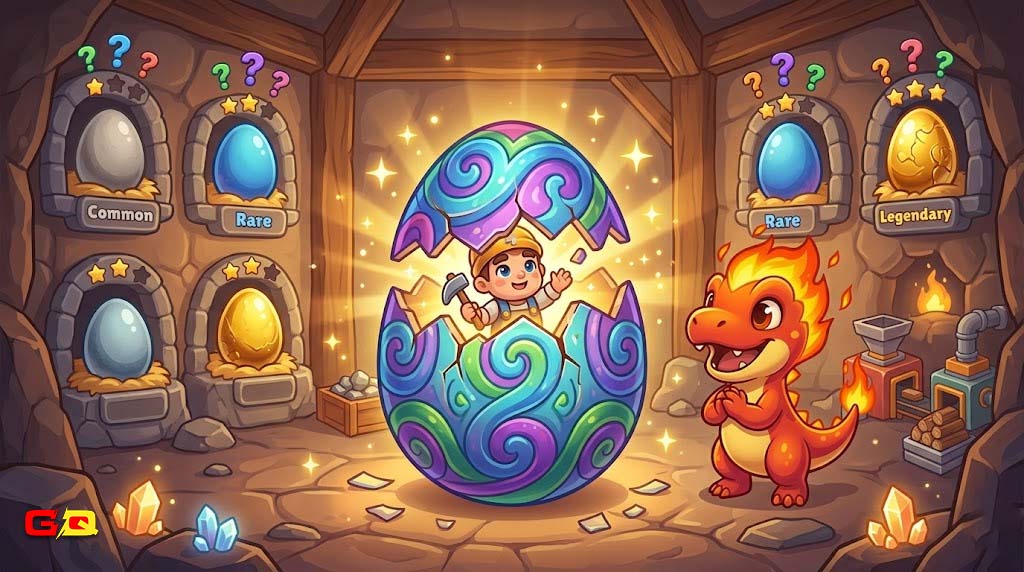
During the rapid-fire segment, Agnes revealed her current favorite feature in Craft World: the egg hatching system.
Players can now:
- Hatch eggs to obtain different Workers
- Workers come in varying rarities – and the excitement of discovering which rarity you get is part of the appeal
- Upgrade hatcheries to increase incubation slots
“Every time I’m hatching an egg, I’m actually so excited to see what kind of rarity I get. Right now, that’s like the most exciting thing for me in the game.”
This feature adds a gacha-like element to the game that complements the core resource management loop, giving players another engaging reason to log in daily.
Why the Ronin Community Should Pay Attention
When asked why the Ronin community should care about Craft World, Agnes highlighted the team’s unique ability to bridge Web2 and Web3 audiences:
“We really try to not only get the Web3 community hooked, but the Web2 community as well. Not many games do this. We have a real edge because of the knowledge within our team in targeting Web2 players.”
This dual-audience approach is what makes Craft World on Ronin uniquely positioned for mainstream adoption.
The game is designed so that:
- Web2 players can enjoy Craft World purely as a fun, casual resource management game – never needing to know about blockchain, tokens, or wallets
- Web3 players can leverage advanced features like liquidity pools, on-chain trading, NFT resource generation, and strategic market plays
- Both groups coexist in the same economy, creating a richer, more dynamic ecosystem
When asked to describe Angry Dynomites Lab in one word, Agnes answered without hesitation: “RAWR.” 🦖
Key Takeaways
Here’s a summary of everything we learned about Craft World on Ronin from the RoninBros Episode 21 X Space:
| Topic | Key Insight |
|---|---|
| Origin | Founded by Kolibri Games co-founder Oliver Löffler; merges proven Web2 gaming expertise with blockchain |
| NFTs | Fire Dynos (500) and Water Dynos (1,500) produce the rarest base resources; 450+ ETH total traded volume |
| Interoperability | 6-7 cross-game collaborations completed; |
| Ronin | Chosen as the only gaming-focused chain; direct support from Sky Mavis team |
| Bots | Major challenge during mainnet launch; team built robust detection and prevention systems |
| Monetization | Critical for sustainability; Web3 builders should not neglect it |
| Alpha | Chests & Blueprints system in early development – new land plots, leveling, rarity tiers |
| Recent | Egg hatching system with Workers of varying rarities |
| Vision | Bridge Web2 and Web3 gamers in one shared player-owned economy |
Play Craft World Now
Ready to start your journey? Craft World is free to play and available on multiple platforms:
- 💻 Web: craft-world.gg
- 📱 Android: Google Play
- 📲 iOS: App Store
No NFT or crypto knowledge required to start. Just click and play.
Sources
- RoninBros Episode 21 X Space – live audio recording with Angry Dynomites Lab team (March 28, 2026) – https://x.com/i/spaces/1pKkOyaayDAKj?s=20
- VOYA Games Litepaper – https://voya-games.gitbook.io/voya-games-litepaper
- Craft World Wiki – https://angry-dynomites-lab.notion.site
- Angry Dynomites Lab Discord – https://discord.gg/angrydynomiteslab
- Fire Dynos (OpenSea) – https://opensea.io/collection/angry-dynomites-lab-fire-dynos
- Water Dynos (OpenSea) – https://opensea.io/collection/angry-dynomites-lab-water-dynos
Recommended Reading
- How to Get Dynos in Craft World: Full Guide 2025 – Every method to obtain Dyno NFTs and earn $FIRE & $WATER tokens
- How to Get $Fire in Craft World (Ultimate Guide, 6 Ways) – Six proven ways to acquire $FIRE tokens
- Craft World $Water – How to Get the $Water Token (Ultimate Guide, 6 Ways) – Complete breakdown of the Water element and every path to earning $WATER
Article author – GQ, Web3 Gaming Content Creator, Promoting WEB3 games. OG Craft World player and Ronin content creator since testnet days.